

There are over 151,975 convenience stores operating across the United States right now, and 63% of them are owned by operators running 10 locations or fewer.
That is a massive portion of an industry being managed by people without dedicated data teams or enterprise IT departments.
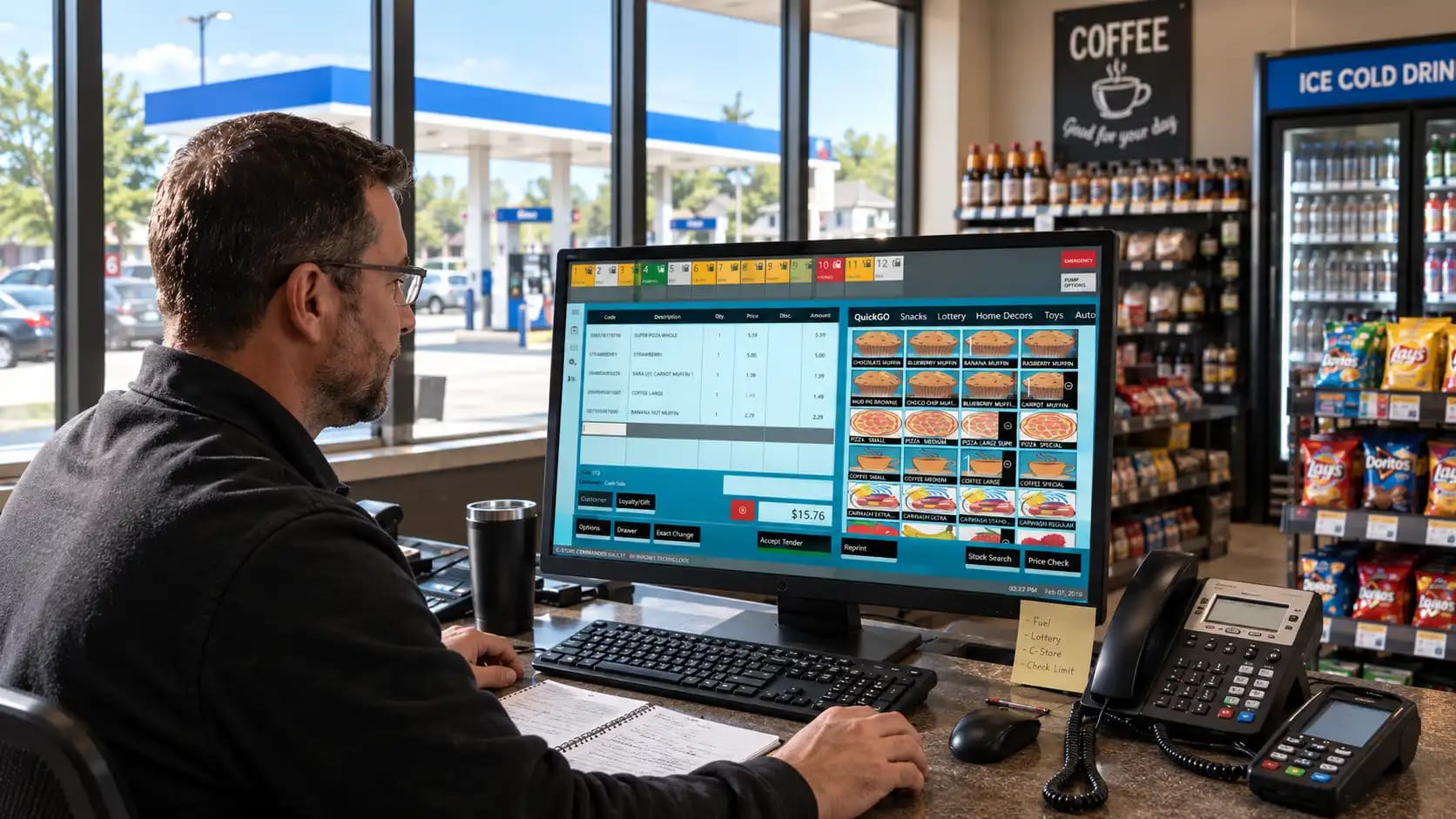
Yet the software these operators depend on most, their convenience store POS software, often fails them at the exact moment it matters most. When they need a clear, accurate picture of what is happening across every location at once, it falls short.
This article breaks down exactly why that failure happens, and what it actually costs.
The Multi-Site Reporting Problem Is a Software Architecture Problem
Most operators assume that if their POS works well at one site, it will work just as well across five or ten. That assumption is where the trouble starts.
The reality is that most convenience store POS software was built around single-site logic. Multi-site reporting was added later, often as a bolt-on feature, not as a core design principle.
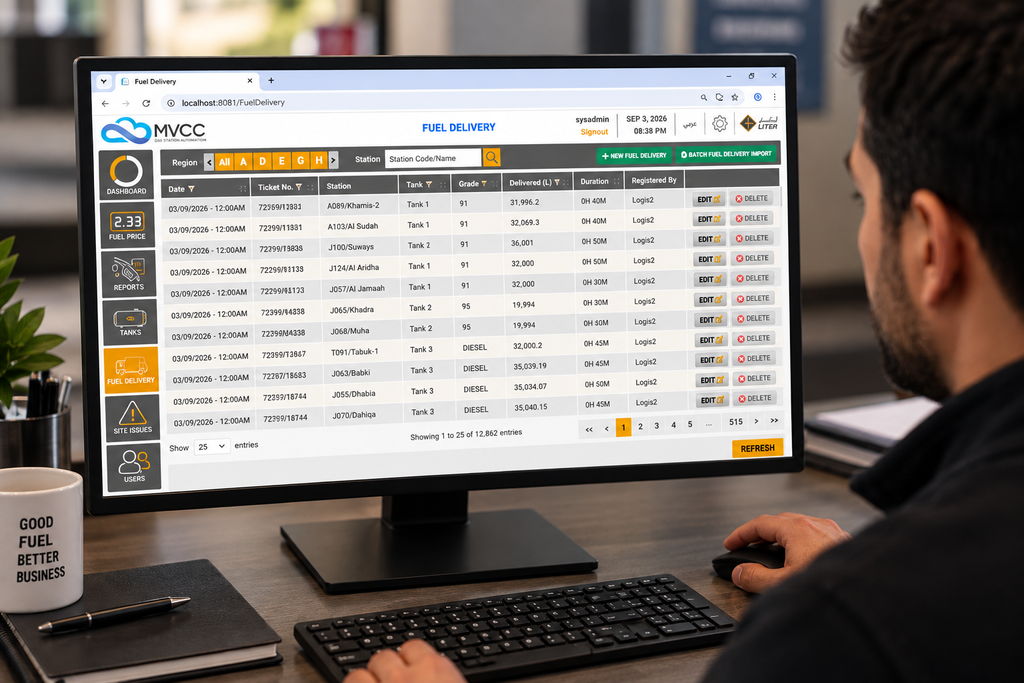
The difference between those two approaches is visible the moment you try to compare real-time performance across locations from one screen.
What Good Multi-Site Reporting Actually Requires
Before diagnosing why most systems fall short, it helps to define what genuine multi-site reporting looks like in a fuel and convenience environment.
- Real-time transaction data from every site feeds into a single dashboard without manual upload.
- Fuel sales and tank inventory are visible alongside in-store sales in the same view.
- Price book consistency is tracked and enforced across all locations centrally.
- Exception reporting that flags discrepancies at any site automatically
- Site-by-site and combined performance comparisons are available without running separate queries
Most convenience store POS software on the market meets some of these criteria. Very few meet all of them without significant custom configuration or additional third-party tools layered on top.
The Data Silo Problem Built Into Most POS Platforms
The failure of most POS software at multi-site reporting is not a mystery. It has a name. Data silos.
68% of business leaders across retail sectors cite data silos as the primary barrier to effective cross-location reporting. In a convenience and fuel retail context, those silos look specific and familiar.
The POS system captures transaction data. The fuel management system captures dispenser and tank data. The inventory platform tracks stock levels. The back-office accounting tool handles financials.
In most setups, none of these systems shares data automatically. Each one holds a piece of the operational picture, and pulling them together requires either manual export, third-party middleware, or both.
Why Fuel and C-Store Operations Are Especially Vulnerable
Retail data silos are common across sectors. But convenience and fuel retail has a layer of complexity that makes the problem significantly worse than in a standard retail environment.
A typical c-store site generates multiple data streams simultaneously. The indoor POS handles retail transactions. The forecourt controller manages pump authorizations and fuel dispensing.
The automatic tank gauge tracks inventory in real time. The fleet card processor handles commercial customer accounts separately. A loyalty platform may run on yet another system.
Each of these data streams has operational relevance. Each one affects decisions around pricing, inventory, compliance, and staffing. When they do not connect through a unified reporting layer, operators are left making decisions from fragments.
The US c-store industry processes approximately 148.2 million transactions daily, and that is across a sector where nearly 80.7% of locations sell motor fuel.
The volume and complexity of data being generated every single day make the gap between a well-integrated and a poorly-integrated POS visible very quickly.
The Reporting Lag That Costs Operators Real Money
When your multi-site reporting is fragmented or delayed, the decisions that follow are fragmented and delayed too. That is not an abstract problem. It shows up on the bottom line in very specific ways.
Merchandise shrink now runs approximately $2,000 per store per month at the average c-store, according to NACS data. Shrinkage as a whole claims between 1 and 2% of total revenue.
Across a network of five or ten locations, that is a meaningful number. But here is the critical detail. Most shrinkage is only identified after the fact, during a reconciliation cycle that is already days or weeks behind.
An operator with fragmented reporting cannot catch a shrink pattern at Site 3 early enough to investigate it before it compounds. By the time the data surfaces through manual compilation, the window to understand what happened has often closed.
The Price Book Consistency Failure
You might not immediately link price book management to reporting failure, but they are directly connected.
When convenience store POS software does not centralize price book control across locations, individual sites end up running slightly different pricing structures, often without anyone at the ownership level knowing.
A product priced at $2.49 at one location and $2.69 at another is a margin problem and a customer trust problem, and it is invisible without consistent cross-site reporting.
Fuel pricing inconsistencies carry even higher stakes. A price change that pushes to three out of five sites but misses the other two, because the system relies on manual input at each location, costs money on every gallon sold at the wrong price until someone notices.
The Compliance Reporting Gap
Now let’s have a look at a more serious concern. Regulatory compliance in fuel retail is not optional, and it generates its own reporting requirements.
Tank variance allowances, weights and measures records, age-restricted transaction logs, and payment card compliance documentation all require reliable, complete data.
When the POS does not connect natively to fuel management and tank monitoring systems, producing accurate compliance reports requires manually pulling data from multiple sources and reconciling it by hand.
That process is slow, error-prone, and in a high-inspection environment, a documented liability.
Why Generic POS Platforms Fail Fuel Retailers Specifically
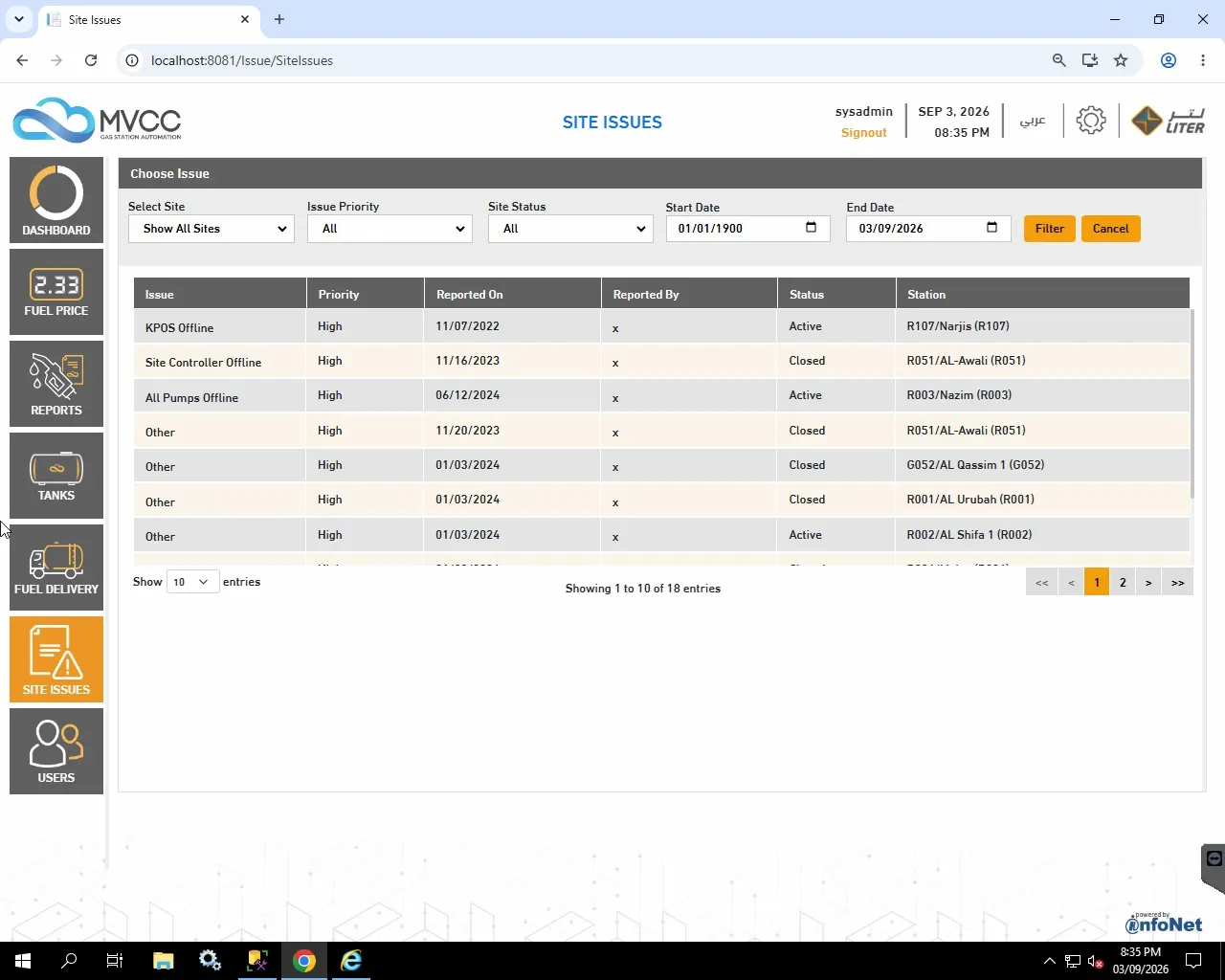
Here is something that catches a lot of operators off guard. Many widely used POS platforms were built for general retail, food service, or hospitality first.
Fuel and convenience features were added to expand market reach, not designed from the ground up for how a forecourt actually operates. The consequences show up specifically in reporting.
| Reporting Function | General Retail POS | Fuel-Specific Integrated POS |
| Fuel transaction data | Absent or manual entry | Native dispenser integration |
| Tank inventory reporting | Not available | Real-time ATG sync |
| Fleet card reconciliation | Requires a third-party add-on | Built-in fleet card processing |
| Price book multi-site management | Single-site focused | Centralized across all locations |
| Fuel variance tracking | Not applicable | Automated daily variance alerts |
| Cross-site performance dashboard | Basic sales comparison | Full operational visibility |
The gap between those two columns is where most multi-site operators lose money, time, and visibility.
The Cloud Adoption Gap in Convenience Retail
Think about this. The convenience store software market globally was valued at $2.5 billion in 2025 and is predicted to grow to $5.5 billion by 2035, driven largely by demand for cloud-connected platforms.
Within that market, cloud-based deployments already account for 68.2% of all convenience store software installations.
Yet a significant portion of operating c-stores, particularly among smaller and mid-sized multi-site operators, are still running on-premise POS systems with local servers at each location. On-premise architecture is inherently location-bound.
Real-time data sharing across sites requires infrastructure that most on-premise POS setups simply were not built to provide.
The shift to cloud-based convenience store POS software is not a trend driven by preference. It is driven by the operational reality that multi-site reporting cannot work properly when data lives on servers sitting in individual back offices across different locations.
What Integrated Reporting Actually Looks Like When It Works
Operators who have moved to a cloud-connected, fuel-native POS platform describe the shift in consistent terms. The first thing they notice is speed. Information that previously required a multi-step manual process appears automatically.
The second thing they notice is completeness. Instead of seeing in-store sales separately from fuel volumes and tank readings, everything is visible together. A manager reviewing the previous day’s performance sees the full picture, not a partial one assembled from three different reports.
Retailers using POS systems with integrated analytics see profit increases of between 5 and 10% from better pricing decisions, optimized staffing, and more accurate inventory management.
For a sector where fuel revenues have already declined, with fuel sales down 5.7% in 2024 according to NACS, that kind of improvement from the reporting layer is not incremental. It is structural.
The Questions Multi-Site Operators Should Be Asking Their POS Provider
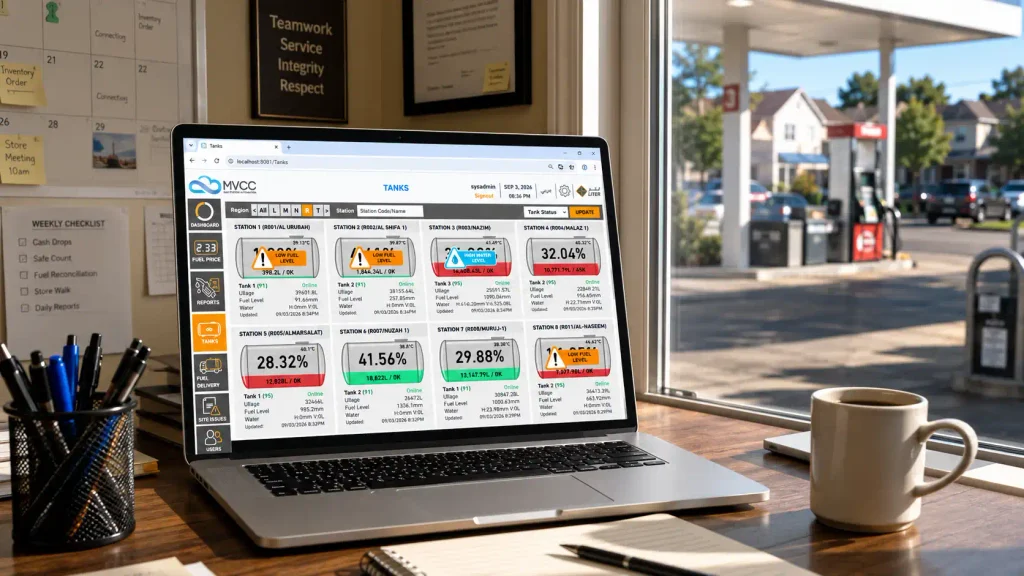
If you are evaluating your current convenience store POS software or considering a change, these questions cut through a lot of marketing language and get to the operational reality quickly.
- Does your system connect natively to fuel dispensers and ATG systems, or does that require a third-party integration?
- Can I see real-time sales, fuel, and inventory data for all my locations in one dashboard without logging into each site separately?
- How does price book changes push to all locations, and what happens if a location misses an update?
- How is fuel variance tracked, and does the system alert automatically when variance exceeds a set threshold?
- Does the reporting layer update in real time, or does it rely on scheduled syncs or manual exports?
- Is the system built for convenience and fuel retail from the ground up, or is fuel management an add-on feature?
If any of those questions produce an unclear or evasive answer, that is useful information about the gap between what the platform promises and what it delivers in a real multi-site fuel operation.
Matching Software to the Actual Structure of Your Business
One more thing worth saying clearly. Multi-site reporting is not a luxury feature for large chains. It is a basic operational requirement for any operator managing more than one location, regardless of how many sites that includes.
The information needed to run two locations well is not twice the information needed to run one. It is fundamentally different information, because comparison, pattern recognition, and exception detection across locations are not possible from a single-site reporting view.
The software that serves a single-site operator well will often create more work, not less, when that operator opens a second or third location.
Choosing convenience store POS software that was designed with multi-site visibility as a core feature, not an afterthought, is the decision that makes every subsequent site addition manageable instead of increasingly complicated.
Final Thought
Most convenience store POS software does not fail at multi-site reporting because the vendors are careless. It fails because multi-site reporting is genuinely hard to do well, and most platforms were not designed for the specific data complexity of a fuel and convenience operation running across multiple locations.
The operators who avoid this failure are the ones who ask the right questions before committing to a platform, who treat reporting capability as a core requirement rather than a nice-to-have, and who choose software built from the ground up for how their business actually works.
In a sector with thin margins, high transaction volumes, and growing regulatory complexity, the quality of your multi-site reporting is not a back-office concern. It is a direct driver of whether the business is profitable or not.
InfoNet Tech builds fuel and convenience POS platforms with multi-site reporting as a core feature, not an afterthought.
Frequently Asked Questions
What makes convenience store POS software different from standard retail POS?
Fuel and convenience operations require native integration with fuel dispensers, automatic tank gauges, fleet card processors, and price book systems that manage thousands of regulated and age-restricted SKUs.
Standard retail POS platforms were not designed around these requirements, and fuel management is typically available only as an add-on with limited native reporting capability.
Why do data silos form in multi-site c-store operations?
Most convenience and fuel sites run several independent systems, including the POS, fuel controller, tank gauge, loyalty platform, and accounting software, that were not originally designed to share data with each other.
Without a central integration layer, each system holds isolated data that must be manually extracted and combined to produce a complete operational picture.
How does poor multi-site reporting affect fuel variance tracking?
When fuel management data and POS transaction data are not connected in real time, variance between what the tank records and what the POS reports can go undetected for days or weeks.
By that point, the discrepancy has compounded, and the core cause is much more difficult to identify. Integrated systems surface variance automatically, often within the same business day.
Is cloud-based convenience store POS software necessary for multi-site reporting?
Cloud architecture is not strictly required, but it is the most practical foundation for real-time multi-site visibility.
On-premise systems store data locally at each site, which makes centralized real-time reporting structurally difficult without significant additional infrastructure. Most modern fuel and c-store POS platforms have moved to cloud-based deployment for exactly this reason.
How should a multi-site operator evaluate convenience store POS software before purchasing?
Focus on three core capabilities: native fuel system integration, real-time centralized reporting across all locations, and centralized price book management.
Request a live demonstration using scenarios from your actual operation, including fuel variance reporting, cross-site sales comparison, and price book push to multiple locations. Avoid platforms that require manual exports or third-party tools to complete these basic multi-site functions.